


5 Reasons Why Louie Zamperini is an Epic Hero in Unbroken
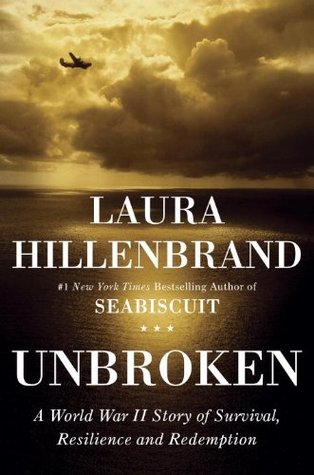
1. He goes on a journey: In Unbroken, Louie goes on several "journeys". His transformation from a total delinquent into an Olympic athlete could be considered one. His time in the Air Force definitely counts also. And the main part of Unbroken, his time in P.O.W. camps in Japan, is definitely a journey. But he also has other troubles, like his struggles with PTSD and alcoholism, that are journeys unto themselves. The book is full of Louie's journeys throughout his life.
2. He faces adversaries along the way: Throughout his journeys, from his childhood to post-war life in the late-40's and 50's, Louie faces adversaries. His worst is the Bird, a prison guard in the prison that Louie is interned at once he arrives in Japan. After Louie first encounters the Bird, he "met the man who would dedicate himself to shattering him" (Hillenbrand 232). This shows that Louie faces some very strong enemies. He is, however, able to overcome them, which leads me to my third point.
3. He overcomes his adversaries: Even though the Bird will stop at nothing to break Louie and strip him of his dignity, Louie ultimately perseveres. H able to survive long enough in prison to see the end of the war, and the guards abandon the prison, fearing retribution from the prisoners and U.S. troops. Louie is now a free man, and he stays at the prison with his fellow prisoners until U.S. troops arrive. But even before then, he overcomes challenges. To make it to Olympic trials, Louie had to race Don Lash, "Indiana University's twenty-three year old record-smashing machine" (Hillenbrand 22). They tied and ended up going to the trials, and the Olympics, together.
4. He comes home changed: The war might be over, but it still haunted Louie. After coming home, he still had to deal with PTSD and nightmares of being tortured by the Bird. He eventually resorted to drinking to deal with these, but also suffered the consequences. He tried taking up running again, but he re-opened a war injury and was unable to run for a while. He sank into a depression. But after hearing Billy Graham, an evangelical speaker, his life turned for the better and he became a motivational speaker and started therapy so he could run again.
5. He exemplifies morals of America: Any epic hero has to embody the culture and beliefs of his country, and Louie does this. His story is one of rising out of poverty in a shack with "no running water, an outhouse behind, and a roof that leaked so badly that they had to keep buckets on the beds" (Hillenbrand 5). Louie uses his natural gifts to get a track scholarship to USC and to go to the Olympics. His patriotism brings him to the Army Air Corps and he becomes a bombardier, but he goes down over the Pacific. After surviving almost 2 months at sea, he and his co-pilot are captured by the Japanese. He outlasts the war and comes home a changed man, but Louie is still able to remain the same, unbroken.
3. He overcomes his adversaries: Even though the Bird will stop at nothing to break Louie and strip him of his dignity, Louie ultimately perseveres. H able to survive long enough in prison to see the end of the war, and the guards abandon the prison, fearing retribution from the prisoners and U.S. troops. Louie is now a free man, and he stays at the prison with his fellow prisoners until U.S. troops arrive. But even before then, he overcomes challenges. To make it to Olympic trials, Louie had to race Don Lash, "Indiana University's twenty-three year old record-smashing machine" (Hillenbrand 22). They tied and ended up going to the trials, and the Olympics, together.
4. He comes home changed: The war might be over, but it still haunted Louie. After coming home, he still had to deal with PTSD and nightmares of being tortured by the Bird. He eventually resorted to drinking to deal with these, but also suffered the consequences. He tried taking up running again, but he re-opened a war injury and was unable to run for a while. He sank into a depression. But after hearing Billy Graham, an evangelical speaker, his life turned for the better and he became a motivational speaker and started therapy so he could run again.
5. He exemplifies morals of America: Any epic hero has to embody the culture and beliefs of his country, and Louie does this. His story is one of rising out of poverty in a shack with "no running water, an outhouse behind, and a roof that leaked so badly that they had to keep buckets on the beds" (Hillenbrand 5). Louie uses his natural gifts to get a track scholarship to USC and to go to the Olympics. His patriotism brings him to the Army Air Corps and he becomes a bombardier, but he goes down over the Pacific. After surviving almost 2 months at sea, he and his co-pilot are captured by the Japanese. He outlasts the war and comes home a changed man, but Louie is still able to remain the same, unbroken.

